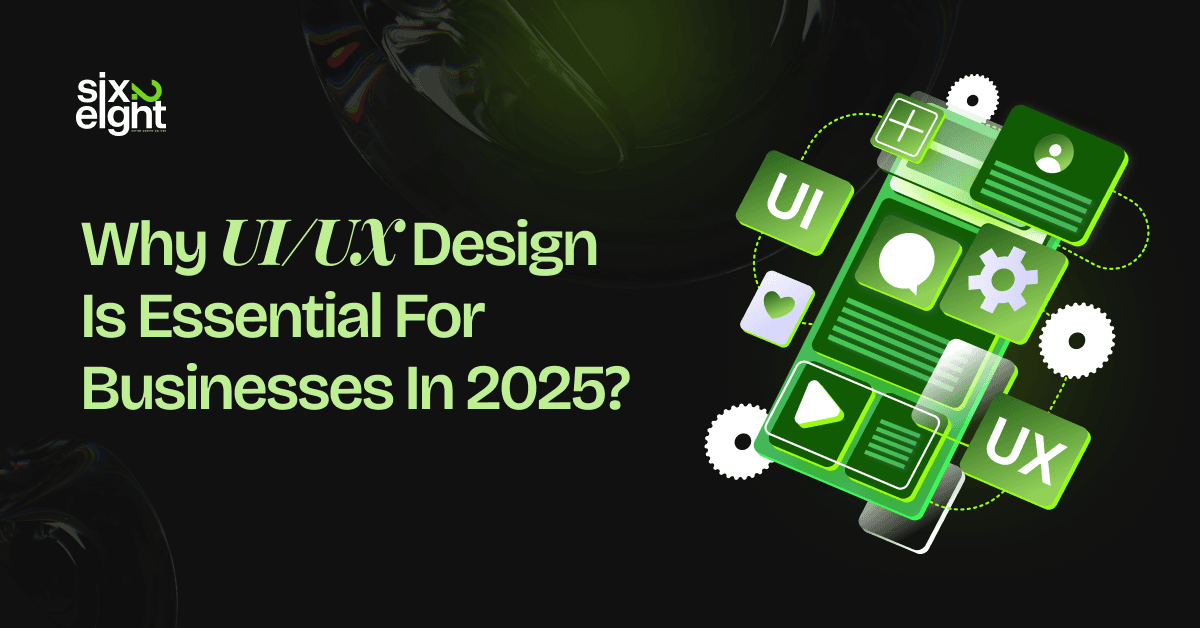
UI/UX design is essential for businesses in 2025 because it now drives how users decide who they trust and buy from. It’s no longer just about making things look good, it’s about making users stay, return, and convert.
A strong UI/UX strategy gives businesses a real edge by turning casual visits into meaningful actions. It builds trust, simplifies interactions, and helps products stand out in crowded markets.
With mobile usage and user expectations at an all-time high, seamless design isn’t optional anymore. It’s the dealbreaker.
That’s why UI/UX design is essential, why UI/UX design is important, and why UI/UX design is essential for businesses in 2025. Need more clarification? We’ve covered everything you need to know.
What is UI UX Design?
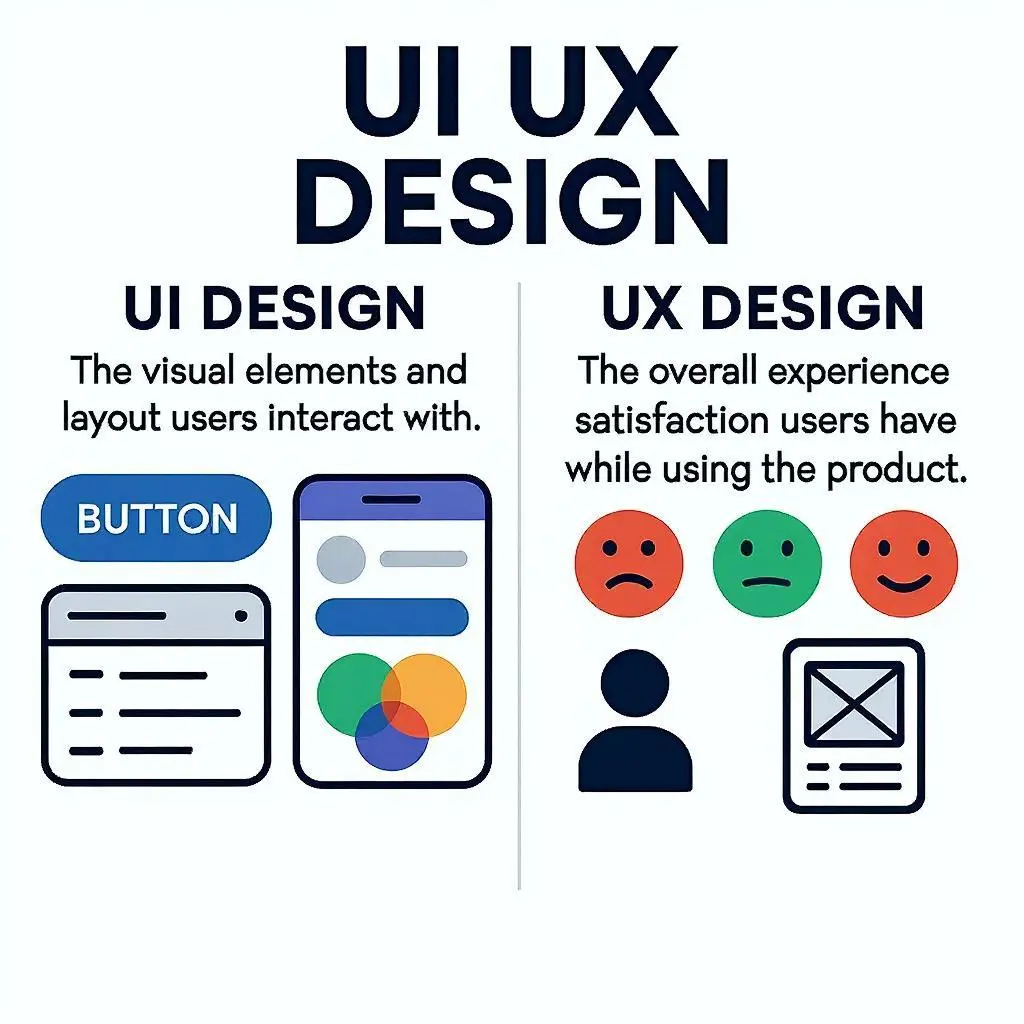
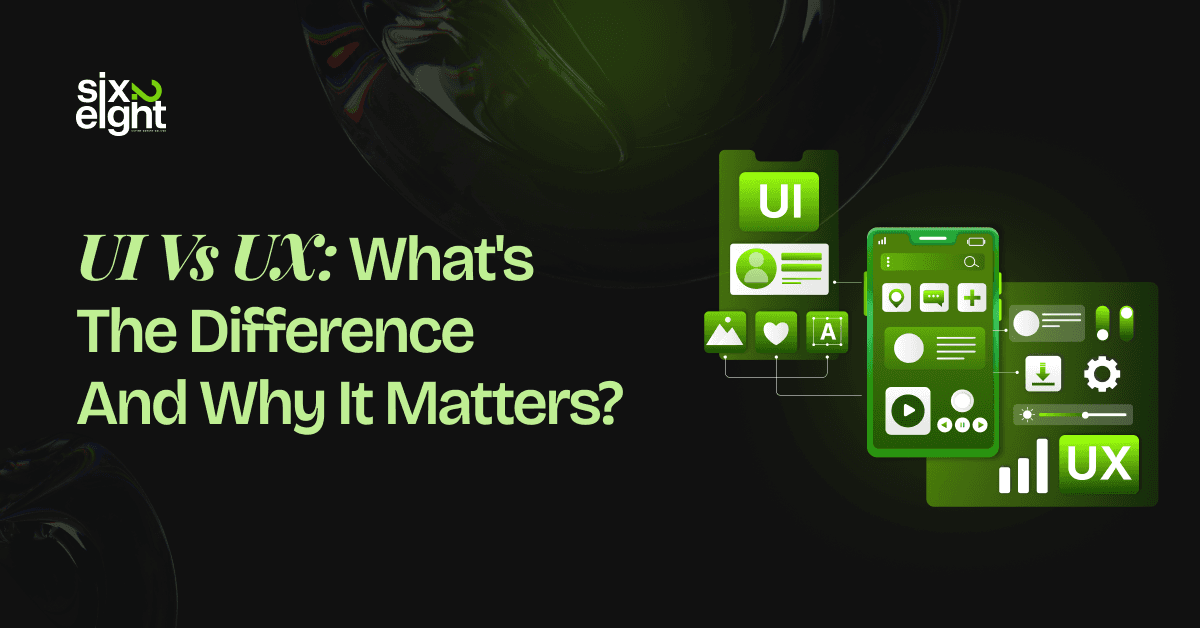
UI UX design is the secret behind digital products that feel easy and enjoyable to use. It combines how a product looks and how it works for users. UI means User Interface, which controls the visual parts users interact with.
UX stands for User Experience, focusing on how users feel and accomplish goals when using the product. Both must work smoothly to keep users engaged and satisfied. Without strong UI UX design, products risk frustrating users and losing business.
This section explains what each part really means and why both matter today.
What is UI Design?
UI design creates everything users see on a screen, like buttons, menus, colors, and fonts. It focuses on making these elements clear and attractive so users know exactly where to click or tap. UI designers build the look and feel of the product.
They make sure each screen looks consistent and is easy to navigate. Good UI design turns complex features into simple, enjoyable interactions. It’s about making digital products visually appealing and straightforward from the first glance.
What is UX Design?
UX design is the process of shaping the entire user journey with a product. It focuses on how easy and satisfying the product feels while solving user problems. UX designers study user behavior and feedback to improve flows and interactions.
They make sure tasks are simple to complete and frustration stays low. UX includes everything from first impressions to ongoing support. Its goal is to create meaningful and enjoyable experiences that keep users coming back. Great UX turns functional products into products users love.
UI Design vs UX Design: A Quick Comparison
| Category | UI Design (User Interface) | UX Design (User Experience) |
| Focus | Visual layout and interactive elements | Overall experience and usability |
| Goal | Make the product visually appealing and easy to interact with | Make the product useful, efficient, and satisfying |
| Main Responsibilities | Design screens, buttons, icons, typography, color schemes, and animations | Research, wireframes, user flows, testing, and iteration |
| Driven By | Aesthetics, branding, and interaction design | User behavior, psychology, data, and feedback |
| Key Elements | Buttons, sliders, checkboxes, menus, color palettes, grids | Personas, journey maps, usability testing, task flows, information architecture |
| Process Stage | Comes after UX in the design process | Comes first and lays the foundation for the UI |
| Tools Used | Figma, Sketch (RIP Adobe XD), Webflow | Figma, Notion, Maze, Optimal Workshop, UserTesting, Google Forms |
| Outcome | A polished, interactive user interface | A smooth, intuitive, and goal-oriented user journey |
| Primary Concern | How the product looks and feels | How the product works and solves real problems |
| Measurement | Visual appeal, consistency, and interface responsiveness | User satisfaction, retention, success rate, error rate, and efficiency |
Why Do Businesses Need UI UX Design?
First impressions are made in less than a second. When users land on a website or open an app, they make an instant judgment. A cluttered interface or confusing layout can turn them off immediately. This is where UI UX design steps in to make that critical first impression count.
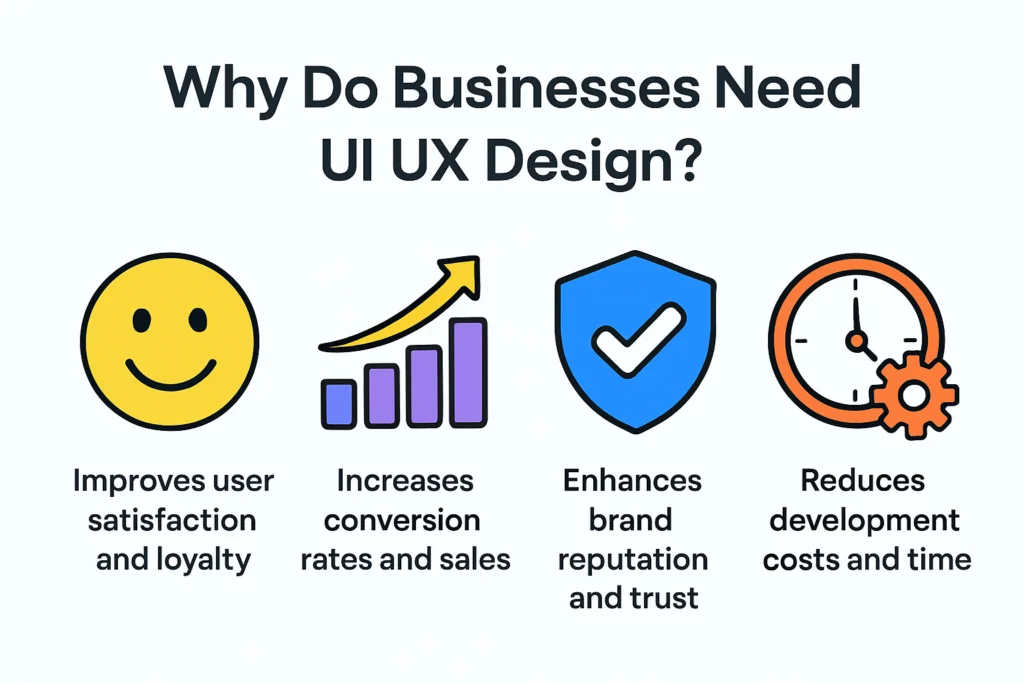
The question of why UI/UX design is essential for businesses in 2025? It is no longer optional. In a digital-first economy, user experience directly affects sales, loyalty, and brand value. Below are the key reasons that answer why do businesses need UI UX design and why it is important for businesses.
1. Increases Customer Retention and Loyalty
Great UI UX design ensures that users enjoy interacting with your digital product. When the experience is intuitive and smooth, customers are more likely to return. Every click, swipe, and interaction must feel effortless. If users encounter friction, they’ll leave and probably never come back. Retaining users is cheaper than acquiring new ones.
A well-designed interface helps customers achieve their goals quickly. This satisfaction builds trust and encourages repeat visits. Loyalty is born when users feel understood and valued through your design.
Businesses that focus on user satisfaction are the ones customers remember. In 2025, loyalty will be driven by convenience, ease, and personalization. UI UX design delivers all three. It guides users toward desired actions and keeps them engaged throughout.
When users feel comfortable and confident using your platform, loyalty follows naturally. That is exactly why UI/UX Design is important for Businesses.
2. Boosts Conversions and Revenue
A solid UI UX design isn’t just about beauty. It’s built to convert. Design decisions must guide users toward action. Whether it’s signing up, buying, or contacting sales, design makes that path seamless. Every visual element, from buttons to typography, contributes to this journey. Clear navigation and strong call-to-actions reduce confusion.
The fewer obstacles users face, the faster they convert. Businesses with poor design often suffer from high bounce rates and low sales. The right design builds confidence and trust. It removes guesswork and provides clarity. When users understand your value instantly, they’re more likely to buy. Optimizing for conversion means designing with purpose.
That’s where UX strategy meets business goals. In 2025, consumer patience will be even shorter. You need to earn trust fast and make the experience frictionless. This makes it clear why UI/UX Design is Essential for Businesses in 2025. It’s not optional. It’s strategic.
3. Reduces Development Costs and Time
Bad design is expensive. Every usability issue adds more development cycles. Fixing mistakes after launch costs much more than solving them early. UI UX design helps prevent these issues from the start. With wireframes, prototypes, and testing, teams catch problems before they go live.
This saves time, money, and effort. A thoughtful design process defines clear user flows. It eliminates guesswork for developers. That leads to faster development and cleaner code. Better planning reduces back-and-forth changes.
It creates alignment between teams. When designers and developers are on the same page, launches go smoothly. In today’s fast-paced market, speed matters. Businesses can’t afford slow rollouts and endless revisions.
Strong UI UX design makes product delivery more efficient. It turns abstract ideas into real, user-focused features. That’s a smart investment for long-term growth. It answers Why do businesses need UI UX design? With a clear financial benefit.
4. Builds a Strong and Consistent Brand Identity
Every touchpoint is a branding opportunity. UI UX design ensures that your brand voice, tone, and style are consistent everywhere. A cohesive digital identity makes your business feel more credible. Customers trust brands that look professional and polished.
Design communicates your values without words. Fonts, colors, spacing, and icons all tell a story. When done right, design creates emotional connections. It makes users feel something when they interact with your product. That connection leads to recognition and recall.
Businesses that prioritize UI UX stand out in saturated markets. In 2025, brand consistency will be a major trust signal. People will choose brands that feel familiar and reliable. That trust starts with design. Your website and apps should speak the same language across every page.
When everything feels intentional and aligned, customers notice. This is why UI/UX Design is important for Businesses that want to grow.
5. Improves User Accessibility and Inclusivity
UI UX design isn’t just for aesthetics or performance. It’s also about making your product usable for everyone. Accessibility is a core part of modern design. Businesses that ignore it exclude a large part of their audience.
Color contrast, font size, and screen reader support are not optional. They are essential. Inclusive design creates a better experience for all users. When you design for accessibility, you improve usability for everyone. That includes users with different abilities, devices, and internet speeds. A responsive and accessible design boosts reach and engagement.
In 2025, accessibility will be a competitive advantage. Governments and platforms are enforcing stricter standards. But beyond regulations, it’s simply the right thing to do. UI UX design bridges the gap between business goals and user needs.
Designing for inclusion also shows that your brand cares. That care translates into stronger customer relationships. This answers Why UI/UX Design is Essential for Businesses in 2025? in a meaningful way.
Boosts Brand Credibility and Trust
A strong visual design creates instant trust between a business and its potential customers. When users land on a well-designed website or app, they instantly form a positive opinion. This first impression plays a major role in whether they choose to engage or exit quickly.
Trust is not built through features alone. It starts with how the digital product feels to use. Design elements like spacing, color consistency, visual hierarchy, and clarity play a huge role. When users feel confident navigating your digital platform, they’re more likely to stick around.
Inconsistent design or clunky interactions break that trust and push users toward competitors. On the other hand, a thoughtful UI/UX design shows users that the business values their time. It signals reliability, attention to detail, and professionalism before a single word is read.
In 2025, when users interact with hundreds of interfaces daily, trust becomes your advantage. Building credibility through intentional UI/UX is no longer optional. It’s now a strategic must.
Helps Businesses Adapt to Emerging Tech Trends
As technology evolves, design must evolve with it. Businesses can’t afford to ignore this shift. UI/UX design keeps your product aligned with how users interact with new devices and systems. From AI-driven personalization to voice-based navigation, new trends are shaping expectations.
Designing for voice, motion, and immersive interactions is the new reality, not the future. Users expect fast, personalized, and intuitive digital products that fit seamlessly into their lives. Adapting to these shifts requires a thoughtful UI/UX strategy, not just surface-level design tweaks.
When businesses invest in UI/UX, they build flexible systems that grow with user behavior. Modern design systems allow brands to stay agile and keep up with shifting technology norms. Without this adaptability, businesses risk falling behind in user engagement and market relevance.
These are just a few powerful reasons businesses can’t afford to overlook UI UX design. It’s not a luxury. It’s a strategic requirement for success in the digital world. A great product starts with a great experience. And that experience starts with design.
The Impact of UI/UX Design on Different Industries
In 2025, businesses can’t afford bad design because users won’t wait to figure things out.
UI/UX design isn’t just about how things look. It’s about how things work.
From higher conversion to deeper trust, the right design makes everything easier, faster, and better. That’s why UI/UX design is essential for businesses in 2025.
Let’s break down why each industry needs it more than ever.
Why does e-commerce need UI/UX design?
E-commerce needs UI/UX design to guide users from product discovery to purchase without confusion or hesitation. A seamless design improves browsing, boosts conversions, and reduces cart abandonment. Clear navigation, fast load times, and easy checkout create trust and encourage repeat purchases.
With thousands of options available, users will leave if something feels off. Strong UX keeps the experience smooth and satisfying. That’s why UI/UX design is essential for e-commerce businesses in 2025.
Why does fintech need UI/UX design?
Fintech needs UI/UX design to make complex financial tasks simple and trustworthy. Users manage money with caution, so the design must feel secure and easy. Confusing interfaces cause drop-offs, while frictionless flows increase adoption.
Users expect fast, clear, and logical journeys, especially when it involves savings, investments, or payments. The right design builds credibility and long-term loyalty. That’s why UI/UX design is essential for fintech businesses in 2025.
Why does self-care need UI/UX design?
Self-care needs UI/UX design to create calming, easy-to-use experiences that encourage consistency. Users turn to these apps for relief and focus. A cluttered or slow interface can disrupt emotional flow and reduce engagement.
Soft visuals and intuitive layouts promote habit-building and daily use. Personalization and comfort keep users invested in their well-being. That’s why UI/UX design is essential for self-care platforms in 2025.
Why does edtech need UI/UX design?
Edtech needs UI/UX design to help learners focus and teachers manage content with ease. Education tools must support different learning styles and devices. Poor UX can block comprehension and motivation.
A smart interface guides users, organizes material, and simplifies progress tracking. Design clarity makes learning feel less intimidating and more engaging. That’s why UI/UX design is essential for edtech platforms in 2025.
Why does B2B SaaS need UI/UX design?
B2B SaaS needs UI/UX design to help users get work done quickly and confidently. Businesses rely on software that’s fast and functional. Confusing flows or complex dashboards cause frustration and increase churn.
Clear UI reduces training time and encourages team-wide adoption. The more intuitive the tool, the more value it provides. That’s why UI/UX design is essential for B2B SaaS companies in 2025.
Why does logistics need UI/UX design?
Logistics needs UI/UX design to reduce operational errors and improve delivery efficiency. Real-time data must be easy to access and understand. Dispatchers, drivers, and customers rely on accuracy and speed.
A well-designed interface cuts down miscommunication and delays. Every touchpoint must work smoothly to optimize movement. That’s why UI/UX design is essential for logistics platforms in 2025.
Why does real estate need UI/UX design?
Real estate needs UI/UX design to help users explore, compare, and connect without effort. Buying or renting a property is stressful. A smooth interface with strong visuals builds trust and encourages inquiries.
Users expect high-quality experiences, from browsing listings to booking tours. Good UX reduces drop-offs and increases conversions. That’s why UI/UX design is essential for real estate businesses in 2025.
Why does fitness tech need UI/UX design?
Fitness tech needs UI/UX design to keep users consistent and motivated. People want fast access to tracking, goals, and workouts. If the interface feels heavy or complicated, they lose interest.
Good design encourages habit formation and reduces app abandonment. Visual feedback and ease-of-use help users progress confidently. That’s why UI/UX design is essential for fitness tech in 2025.
Why does crypto need UI/UX design?
Crypto needs UI/UX design to make complex technology feel secure and usable. Most users aren’t tech-savvy and need guidance. Wallets, exchanges, and apps must look trustworthy and act predictably.
Unclear UX leads to errors and lost funds. Intuitive design lowers the entry barrier and builds confidence. That’s why UI/UX design is essential for crypto businesses in 2025.
Why does travel tech need UI/UX design?
Travel tech needs UI/UX design to simplify trip planning, booking, and updates. Travelers make fast decisions and expect clarity. Confusing filters, slow calendars, or hidden prices cause drop-offs.
A clean, responsive interface improves satisfaction and loyalty. The smoother the booking flow, the higher the conversion. That’s why UI/UX design is essential for travel tech in 2025.
Why does healthcare need UI/UX design?
Healthcare needs UI/UX design to reduce stress and increase access. Patients expect smooth appointment booking, clear records, and secure portals. Doctors need clean dashboards and fast workflows. Poor design slows everything down and affects care quality.
An intuitive system boosts trust, improves communication, and protects data. That’s why UI/UX design is essential for healthcare platforms in 2025.
Wrap Up
UI UX design is essential for businesses in 2025 because users expect fast, clear, and effortless experiences. From first impressions to final actions, good design drives trust, retention, and growth. It lowers development costs, improves accessibility, and helps your product stand out in crowded markets. No matter your industry, better design leads to better results.
If you want to grow in 2025, start with UI UX design that puts your users first.